
Yen-tervention
Another facet of the Eurodollar system

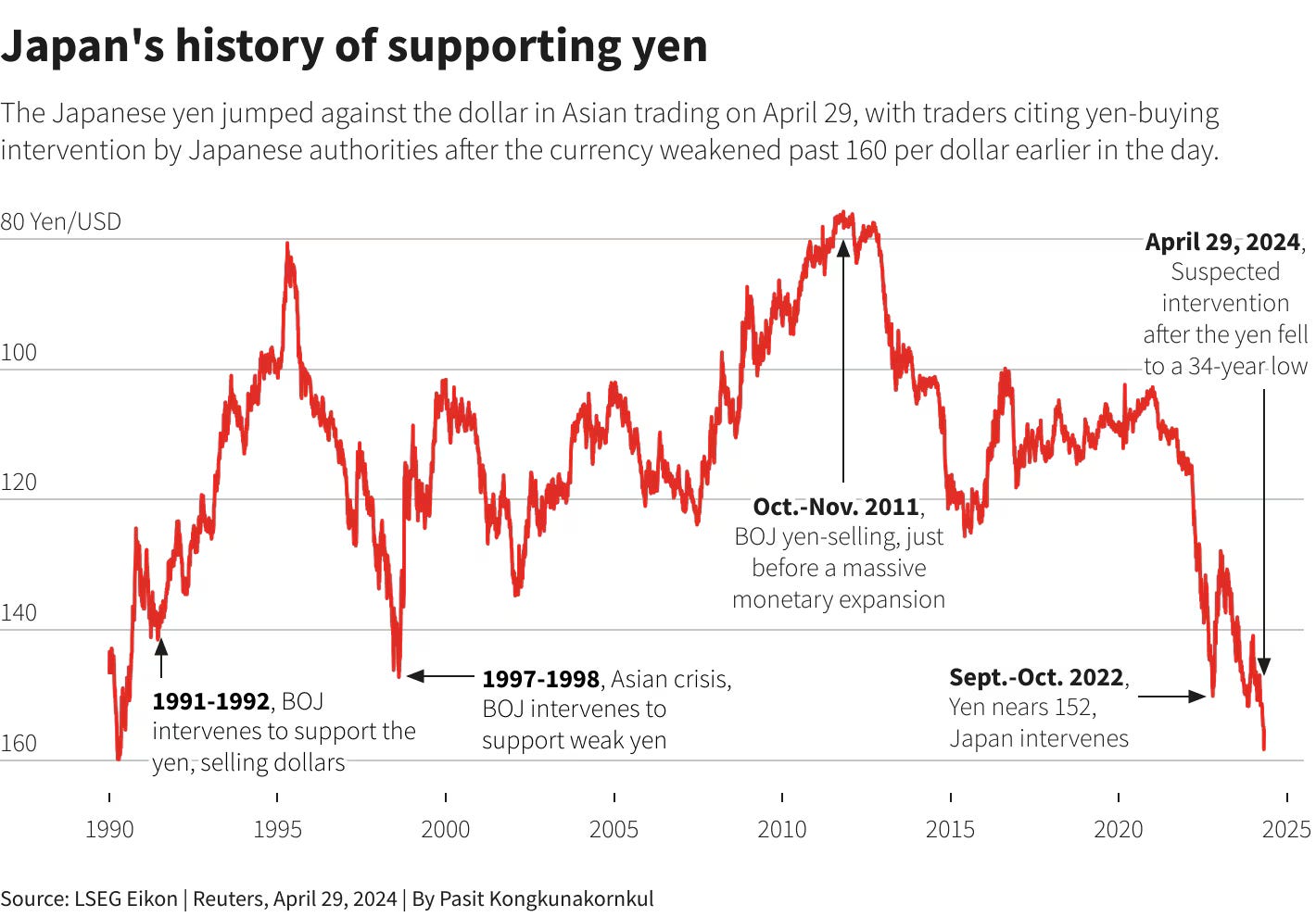
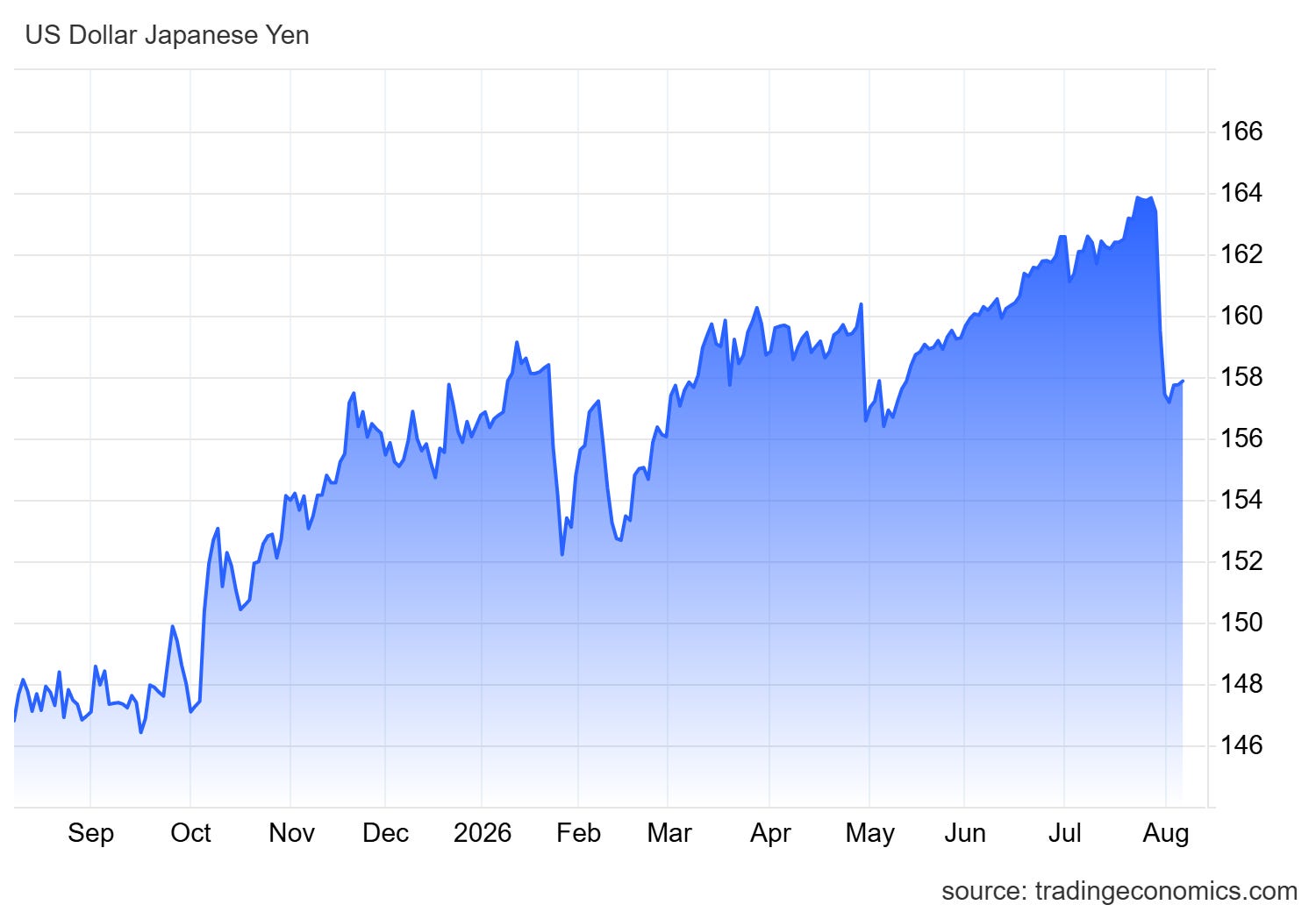
Financial markets almost instinctively interpret every episode of FX intervention through the same framework. A currency weakens beyond a politically uncomfortable level, authorities intervene, markets briefly reverse, and analysts immediately begin debating whether the intervention will “work”. Or worse, it is considered a foreign bailout. The discussion usually revolves around the size of official reserves. Japan’s latest intervention has generated precisely this type of commentaries after the yen depreciated beyond ¥163 per dollar, prompting coordinated action involving the Japanese Ministry of Finance, the Bank of Japan, reports of cooperation with the United States, and the first operational use of the Federal Reserve’s Foreign and International Monetary Authorities (FIMA) Repo Facility as part of an intervention strategy.
Viewed through the lens of exchange rate management, however, the intervention raises more questions than it answers. Japanese authorities have intervened repeatedly over the past several years, deploying tens of billions of dollars to support the currency without fundamentally altering its long-run trajectory. The persistence of depreciation despite forceful policy responses suggests that the problem extends well beyond speculative trading or temporary market sentiment. More importantly, the institutional innovations accompanying the latest intervention indicate that policymakers themselves recognize this reality.
Source: Reuters
Rather than asking whether Japan can defend a particular exchange rate, the more relevant question is why governments now consider it necessary to combine conventional intervention with the liquidity infrastructure of the Fed. The answer lies, as usual, in the architecture of the international (offshore) USD system, as also discussed in this post.
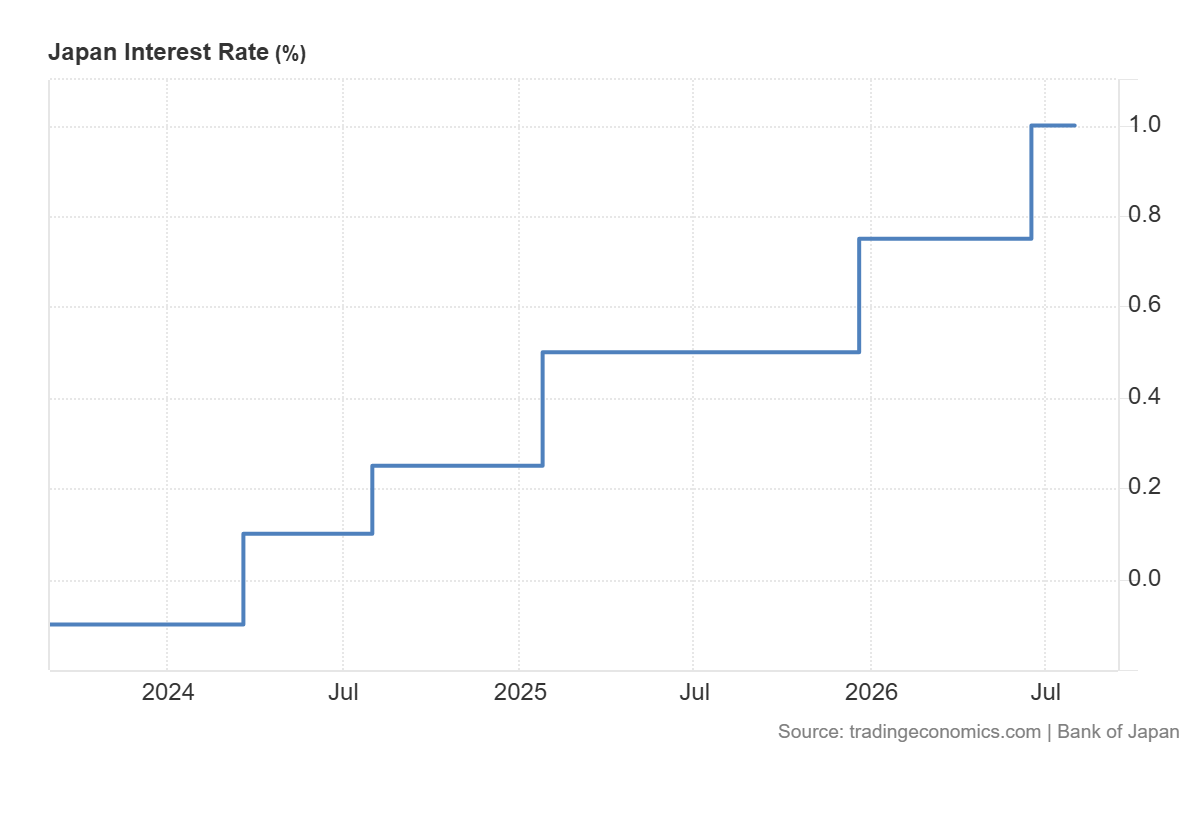
The conventional explanation for yen weakness remains centered on interest rate differentials. Higher Treasury yields relative to Japanese government bond yields encourage investors to shift capital toward USD-denominated assets, while low domestic yields continue to make the yen an attractive funding currency for global carry trades. At first, this argument appears reasonable. Exchange rate models have long emphasized relative monetary policy as one of the primary determinants of currency valuation, and the widening policy divergence between the Fed and the Bank of Japan undoubtedly contributed to the yen’s depreciation.
Yet the recent experience exposes the limitations of that framework. The Bank of Japan has gradually abandoned its ultra-loose monetary stance, modified its yield curve control and increased policy rates. If interest rate differentials alone explained the exchange rate, one would have expected at least a meaningful stabilization of the yen. Instead, depreciation continued, even as the yield gap narrowed. This suggests that capital allocation decisions are responding to other considerations than nominal yield differentials alone.
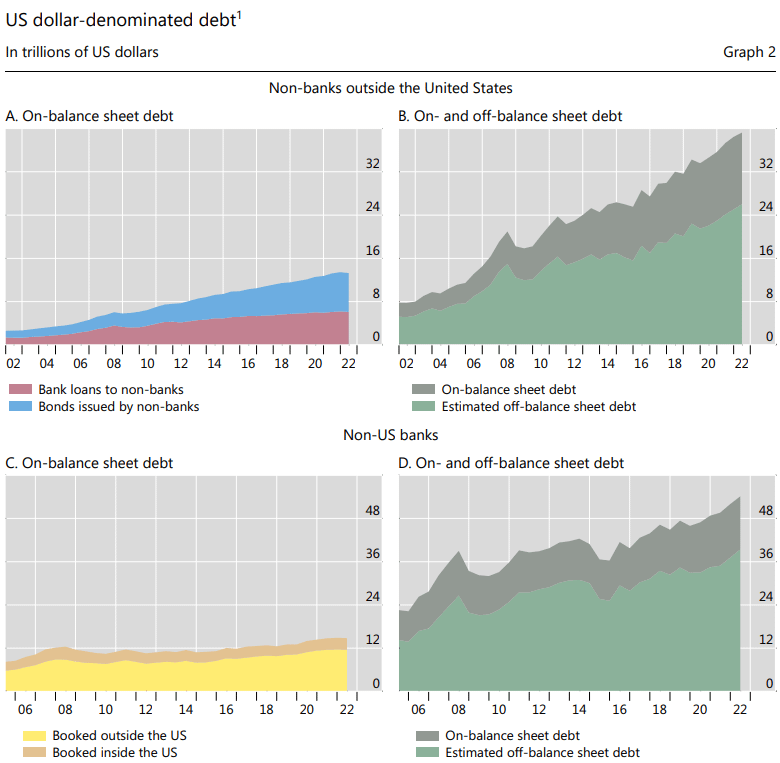
Research from the Bank for International Settlements provides a more comprehensive explanation. Claudio Borio, Hyun Song Shin, Robert McCauley and Patrick McGuire have repeatedly argued that the international role of the dollar cannot be understood solely through trade invoicing or exchange rate models. Instead, the dollar functions as the principal funding currency for the global financial system, with offshore wholesale funding networks generating structural demand that often overwhelms traditional macroeconomic relationships. I made the same argument around here so many times.
Source: BIS
From this perspective, the depreciation of the yen reflects a (or the) growing imbalance in global dollar demand.
This distinction becomes particularly important once energy markets enter the discussion. Japan imports almost all of its crude oil and liquefied natural gas, with the overwhelming majority of these purchases denominated and settled in USD regardless of the exporting country. Consequently, every increase in oil prices immediately raises the quantity of dollars Japanese importers must obtain simply to purchase the same physical volume of energy.
An energy shock therefore becomes a dollar funding shock almost automatically. This mechanism is often overlooked because conventional macroeconomic analysis focuses on inflation. Higher oil prices are assumed to generate higher consumer prices, prompting discussions about monetary tightening and inflation expectations. Yet before higher energy prices appear in inflation statistics, they first appear as higher dollar funding requirements for commodity importers. Firms purchasing crude oil do not pay in inflation expectations. They pay in dollars. When geopolitical tensions simultaneously increase energy prices and disrupt supply chains, the resulting increase in dollar demand extends well beyond commodity markets into banking, trade finance and, ultimately, in wholesale funding. Hence the discussion in this post.
Japan’s exchange rate consequently becomes a reflection of this monetary process. The yen weakens not simply because investors speculate against it, but because the Japanese economy requires an increasing quantity of dollars precisely when global dollar funding conditions are becoming more restrictive.
This interpretation also explains why speculation should be understood primarily as an amplifier rather than the cause of depreciation. Carry trades undoubtedly accelerate exchange-rate movements. Investors borrow yen at relatively low interest rates and purchase higher-yielding foreign assets, particularly US Treasuries and US equities. When volatility rises or funding conditions deteriorate, these positions unwind rapidly, producing abrupt currency movements. However, carry trades respond to expected risk-adjusted returns rather than creating those expectations.
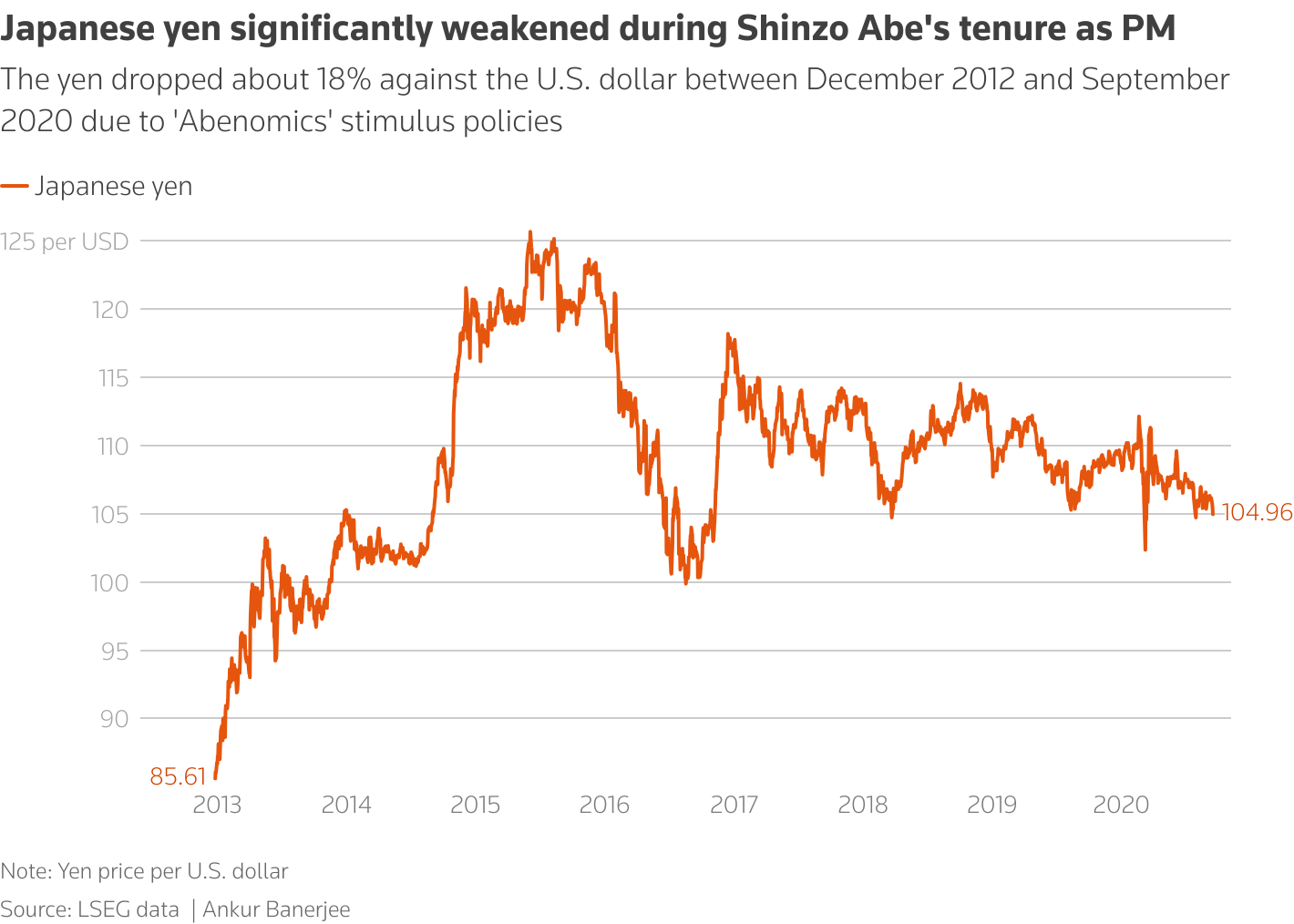
History shows this distinction remarkably well. During the early years of Abenomics, many observers attributed the dramatic depreciation of the yen to QEs and aggressive monetary expansion. Between late 2012 and mid-2015, the exchange rate moved from approximately ¥75 to more than ¥125 per dollar, leading widespread commentary to conclude that massive asset purchases had “printed money” and weakened the currency. Yet the mechanics were considerably more complex. The Bank of Japan was not distributing newly created money into private portfolios. Instead, markets interpreted aggressive policy experimentation as evidence that Japan’s long-term growth prospects remained lower than usual despite extraordinary policy intervention. Declining expected returns generated capital outflows, while rising uncertainty reinforced demand for dollar assets. The depreciation reflected deteriorating confidence in future investment opportunities rather than simply mechanical money creation.
Source: Reuters
The current episode shares similarities. Japanese policymakers have already employed virtually every conventional instrument available. Policy rates have increased. Yield curve control has been progressively relaxed. Official warnings against speculative currency movements have intensified. FX reserves have been deployed on multiple occasions. According to Reuters estimates, the latest intervention alone may have involved approximately $59 billion. Yet investors continue allocating capital away from Japan because the incentives remain largely unchanged.
Perhaps the most revealing feature of the latest intervention is therefore not the intervention itself but Japan’s decision to integrate the Federal Reserve’s FIMA Repo Facility into its operational framework. The FIMA facility was introduced by the Federal Reserve in 2020 following the severe Treasury market dysfunction observed during the initial phase of the pandemic. It allows eligible foreign central banks to obtain dollar liquidity by temporarily exchanging US Treasury securities for reserve balances without selling those securities outright. It is basically a repurchase agreements (or repo) transaction.
This facility is important because it fundamentally changes the relationship between exchange rate intervention and financial stability. Without access to FIMA, defending the yen requires Japanese authorities to sell dollar reserves. Because a substantial share of those reserves consists of US Treasury securities, sustained intervention risks generating Treasury sales. During March 2020, precisely this mechanism contributed to one of the most severe episodes of Treasury market dysfunction in modern history. Foreign official institutions liquidated Treasury holdings to obtain dollar liquidity, while dealer balance sheets simultaneously became constrained by unprecedented selling pressure. The resulting market disruption forced the Federal Reserve to intervene aggressively through large-scale asset purchases and the subsequent creation of FIMA itself. But this should not be interpreted as an argument that foreign governments can somehow threaten the United States by selling their Treasury holdings in exchange for political or economic concessions. I discussed this issue in greater detail in a previous post. The market dysfunction that emerges during episodes of large-scale Treasury sales does not primarily harm the United States alone; it disrupts the functioning of the global financial system, including the very institutions forced to liquidate those securities. Moreover, these sales should not be interpreted as a loss of confidence in US government debt. Rather, they occur because US Treasuries, alongside gold, remain among the most liquid assets available during periods of financial stress. When institutions require immediate dollar liquidity, they sell the assets that can most readily be converted into cash, not necessarily the assets in which they have lost confidence.
Seen from this perspective, FIMA is a mechanism designed to preserve the functioning of the Treasury market. Rather than forcing foreign authorities to liquidate Treasury holdings during periods of stress, the facility enables them to obtain temporary dollar liquidity while leaving the collateral in place. The Fed is therefore protecting its own monetary infrastructure at least as much as it is supporting international partners.
As such, Japan’s decision to rely on FIMA sends a powerful signal. Authorities appear concerned that defending the exchange rate through traditional reserve sales could itself generate instability within global dollar funding markets. Their objective has therefore shifted from managing the exchange rate in isolation toward managing the interaction between exchange rate policy, collateral markets and wholesale dollar liquidity.
This institutional perspective also helps explain reports that the United States participated in the intervention through highly unconventional transactions involving euro sales rather than direct dollar sales. Rather than signalling a general preference for a weaker dollar, American participation appears designed to contain disorderly market conditions while preserving the broader credibility of the dollar itself.
History nevertheless suggests that intervention alone remains unlikely to produce a durable turning point. Currency intervention can alter market psychology and temporarily reduce one-way positioning. It cannot permanently reverse structural capital flows. Exchange rates ultimately reflect portfolio allocation decisions and the demand for funding liquidity. Unless these underlying forces change, official intervention merely delays rather than prevents adjustment.
This is precisely why previous Japanese interventions produced only temporary successes. The immediate appreciation following official purchases reflected uncertainty regarding future government actions. Once intervention ceased, market participants resumed allocating capital according to the same structural incentives that had originally generated depreciation.
The lesson extends well beyond Japan. Exchange rates can no longer be analysed independently from wholesale funding markets because both increasingly respond to the same underlying demand for dollar liquidity. The Eurodollar system has effectively blurred the distinction between monetary policy and exchange rate management.
Consequently, the latest intervention should not be interpreted primarily as another attempt to rescue the yen. It represents something considerably more significant. The integration of conventional FX intervention with the Fed’s liquidity infrastructure demonstrates that policymakers (start to) understand exchange-rate instability as a manifestation of broader stresses within the global dollar funding system. Ultimately, this may be the most important lesson from Japan’s latest intervention. Governments appear willing to accept that exchange rates cannot be stabilised independently from the monetary architecture in which they are embedded. The depreciation of the yen is therefore about the continuing centrality of the dollar in global finance. As long as international trade and commodity markets remain overwhelmingly organised around the dollar, episodes of currency weakness will continue to reveal the structural demands of the international monetary system itself.
How refreshing it is (again) to read you ! The art of popularization with the right level of attention to detail. We read so many "disaster is coming" analyses these days. If it weren't you, I would have to dig deep in the BIS site, wich is tedious work for a non-professional but wanting to understand what's going on. Txs a lot for your substack.
excellent discussion. I think this, though, is the lede which you buried
"The Eurodollar system has effectively blurred the distinction between monetary policy and exchange rate management."
It's funny, the carry trade is such a popular talking point now, I wonder how relevant it is overall. I guess a lot depends on how you define it, because arguably, Japanese investors heading overseas is essentially the same thing without taking on the debt. but has the same impact.
certainly, if Japanese investors bring their money home on a wholesale basis because there are significant expected returns, that will change things, but right now, it seems very hard to believe.